
Posted on: January 20, 2026 / Last updated: January 20, 2026
Maersk Returns to the Suez Canal: A High-Stakes Bet on Service Quality
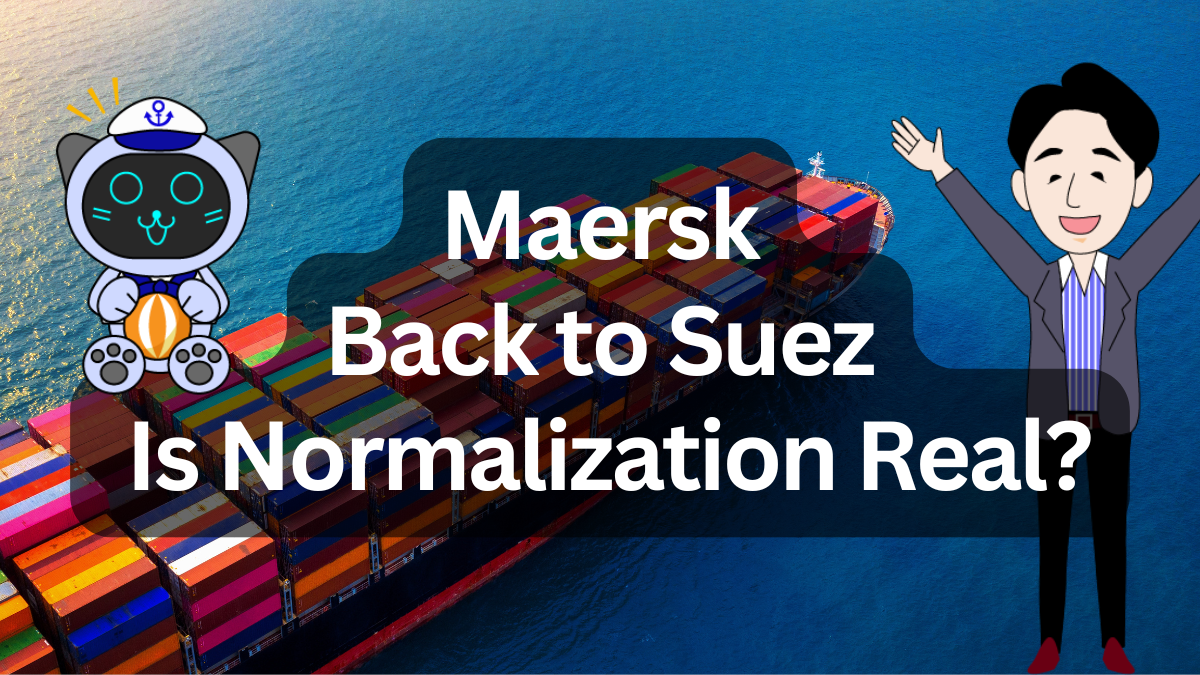
The global container shipping industry is entering a new turning point as Maersk makes a bold decision to return to the Suez Canal despite persistent geopolitical instability in the Middle East.
This move signals a shift in strategy where operational efficiency and service reliability are once again being prioritized even as security risks remain unresolved.
CONTENTS
Watch the Video Here
Maersk’s Decision to Resume Suez Canal Transits
Maersk announced that it will reroute its standalone Middle East and India to US East Coast container service known as MECL back through the Suez Canal instead of continuing the Cape of Good Hope detour.
This decision marks the first official declaration by a major liner operator to resume regular Suez Canal transits since the Red Sea security crisis began.
Westbound sailings include the vessel Cornelia Maersk which departed Jebel Ali on January 15 while eastbound operations feature Maersk Detroit which left North Charleston on January 10 both planning Suez transits.
Why Now Service Quality and Cost Efficiency
One of the primary drivers behind this move is service quality recovery.
The Cape route significantly extends transit times and reduces schedule reliability making it increasingly difficult for carriers to meet customer expectations.
By returning to the Suez Canal Maersk aims to shorten transit times and offer what it describes as the most efficient schedule for its customers.
Another key factor is operational efficiency and cost control.
Avoiding the long detour reduces fuel consumption improves vessel rotation and enhances overall network productivity.
Maersk has already conducted two trial transits in December and January and believes sufficient safety assurances are currently in place.
Strategic Backing and Alliance Implications
Maersk maintains a strategic partnership with the Suez Canal Authority which likely provides additional operational support and coordination.
According to industry reports Maersk and Hapag Lloyd under the Gemini cooperation framework are also considering broader Suez resumptions across India Middle East and Mediterranean routes.
Maersk’s move may set a precedent but it does not yet represent a full scale industry wide normalization.
Geopolitical Risks Still Loom Large
Despite the operational logic behind the decision the geopolitical backdrop remains highly unstable.
Iran is facing escalating internal unrest and increased pressure from Western governments including the United States.
If tensions escalate further Iran backed Houthi forces in Yemen could resume or intensify attacks on commercial vessels in the Red Sea.
This risk is not theoretical as global shipper groups have already warned that a return to Red Sea routes may be premature from a security standpoint.
Market Impact and Cost Trade Offs
From a market perspective a broader return to the Suez Canal would increase effective vessel supply and place downward pressure on freight rates.
However war risk insurance premiums for Red Sea transits remain elevated and could rise further depending on regional developments.
- Freight rates may soften due to increased capacity
- Insurance costs could offset savings from shorter routes
- Total logistics costs remain uncertain
Outlook A Fragile Step Toward Normalization
In conclusion Maersk’s return to the Suez Canal represents a cautious and calculated step toward operational normalization.
However it is best described as a fragile recovery built on conditional security assumptions.
Shippers should continue to plan for potential disruptions maintain lead time buffers and closely monitor developments in the Middle East.
Flexibility rather than optimism will remain the key to managing logistics risk in the months ahead.